Gas crisis halts production in several factories in Ashulia, fears of layoffs

Published: 02:57 20 August 2026
A severe gas crisis has severely disrupted production activities in several gas-dependent factories in Ashulia. The production capacity of some factories has decreased by up to 75 percent, while production has completely stopped in some places. Due to this, industrial establishments are facing huge financial losses every day.
Production costs have also increased due to the use of alternative fuels to keep factories running. Officials of several factories have expressed concern that decisions such as laying off workers or reducing manpower may have to be taken if the gas crisis continues for a long time.
Factory production halted due to low gas pressure
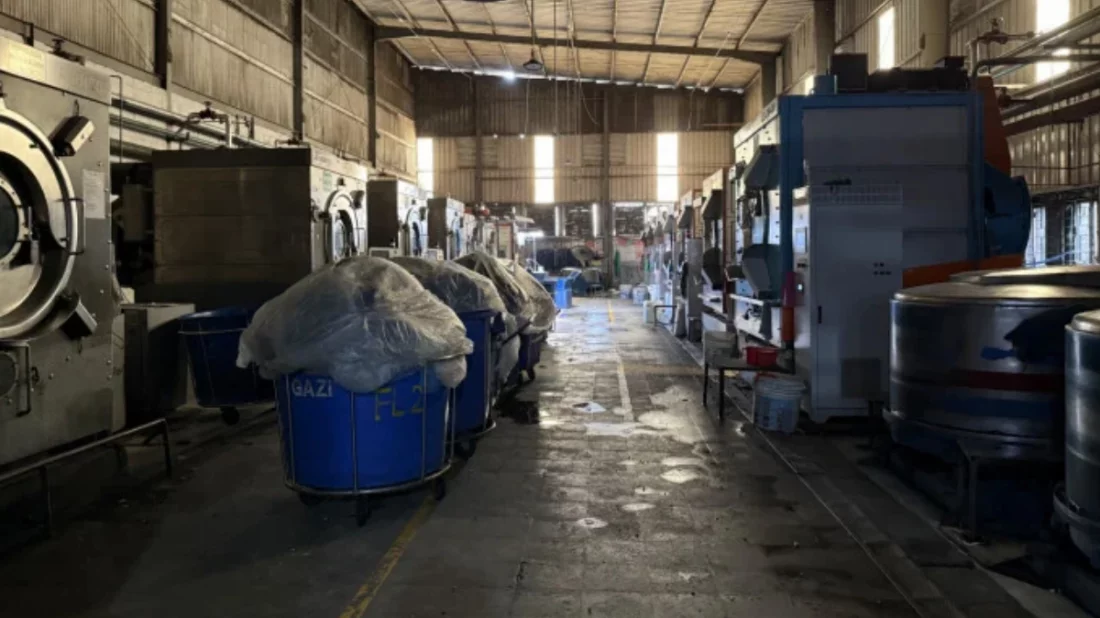
ARO Wet Processing Limited, a company of the Fashion Globe Group, had been operating at low capacity for several weeks in the Amtala area of Kathgarh, Ashulia. Later, the factory's production completely stopped on Wednesday night and Thursday morning.
On site, the activities of three sections of the factory were seen to be closed. There were no workers present inside. Security guards and a few officials were stationed there.
Factory officials said that production gradually decreased after the gas crisis began. At one stage, production capacity decreased by up to 75 percent.
The factory's daily production capacity is about 50,000 pieces. It has been possible to produce up to 20,000 pieces by bringing gas from outside. Even then, a part of the factory had to be closed.
10 PSI is required, maximum 2.5 is available
The factory has 80 to 90 machines in the dry process, washing and finishing quality sections. Out of these, 24 machines have to be closed.
On-site, the factory's gas meter shows 2.5 PSI pressure. Officials say that at least 10 PSI of gas pressure is required to maintain normal production.
However, currently the gas pressure is fluctuating between zero and a maximum of 2.5 PSI. Even when pressure is sometimes obtained, it is not possible to use it in production because the gas quality is not proper.
Cost of bringing in alternative gas is increasing
Fashion Globe Group Company Secretary RAK Liton said that production at their washing plant has dropped by up to 75 percent.
Although efforts are being made to keep production running by bringing in gas from outside to deal with the crisis, it is incurring additional costs. According to the information provided by him, it is costing about Tk 30,000 extra per hour to run production in this way.
He also said that the gas pressure in the factory is zero for almost half of the day. Many gas-dependent factories in Savar-Ashulia are facing the same problem.
Textile factory closed for 15 days
An official of the Pakija Group, on condition of anonymity, said that their textile factory has been completely closed for 15 consecutive days due to the gas crisis.
He claims that this is causing a loss of about Tk 1 crore every day. The factory security guards also said that there are currently no workers inside.
On Thursday morning, some workers came to the factory gate, but they were not allowed to enter.
Claim of loss of 11 crore taka per day
Aniruddha Piyal, Managing Director of Ring Shine Textile Limited, said that although their dyeing factory is running on paper and pen, there is no actual production due to lack of gas pressure.
According to him, although the daily production capacity of the factory is 90 tons, it is currently not possible to produce even two tons. He claimed that there is a loss of about 11 crore taka per day.
Even if the gas pressure increases slightly, the pressure decreases within a short time even if the machine is started. This is repeatedly hampering the production process.
About 975 workers are employed in the factory. Even though production has decreased, the workers have to be paid their salaries.
Production costs have increased in alternative fuels
Khorshed Alam, Chairman of Little Star Spinning Mill in Jamgarh, said that it has become difficult to run their mill at only 40 percent of its capacity even after using various fuel sources.
Currently, no production is possible through gas. About 25 percent of production is being run through electricity. In addition, efforts are being made to keep some parts of the production running using solar power and batteries.
However, he said that the production cost has increased by about 12 percent due to the use of alternative energy. An additional 14 to 15 taka is being spent on producing each pound of yarn.
As the gas pressure has increased to a maximum of 1 to 1.5 psi, it has also become difficult to run the generator.
Fears of a 30 percent reduction in manpower
To deal with the crisis, Little Star Spinning Mill is rationing production in three shifts. Currently, only two of the six sections are operational.
Khorshed Alam said that despite the loss, the yarn has to be sold to pay the salaries of the workers. However, if the situation of gas shortage continues, there will be no choice but to reduce the manpower by at least 30 percent.
The Industrial Police's statement is different
However, the Industrial Police's statement regarding the closure of the Ashulia factory is somewhat different.
Superintendent of Industrial Police-1 Mohammad Mominul Islam Bhuiyan said that they do not have information about any factory in the Ashulia region being closed due to the gas shortage.
He said that Munnu Ceramics was closed for a day or two. Apart from this, another factory, including Preeti Apparels, was facing problems at the same time. However, he also said that these factories do not have problems again when the gas pressure is normalized.
Overall situation
On the one hand, production is being disrupted due to the reduction in gas pressure in the industrial area of Ashulia, while on the other hand, production costs are increasing due to the use of alternative fuels. Industrial establishments are demanding the normalization of gas supply as soon as possible. Those concerned fear that if the crisis continues, it may affect both production and employment.
Advertisement
Most Readed - Finance & Trade




- Football Federation President Wants Ronaldo Back in Portugal Squad by November
- Devastating Flash Floods Hit Nepal Again; Homes and Bridges Swept Away
- Data Collection for Family Cards Begins Monday; Government Workers to Visit Homes
- Three-Day Mosquito Eradication Drive Begins in Savar's Bongaon
- Countless Decembers will come and go, but Sheikh Hasina will not return to the country: Rashed Khan
- Ronaldo faces risk of 6-month ban for leaving national team camp
- Houthis Claim Third Attack on Riyadh Airport; Aircraft Damaged
- Cybercriminals Claim to Possess Data of 19 Million Pathao Users; $400,000 Ransom Demanded
- Ronaldo shares emotional message upon Messi's retirement, expressing 'utmost respect'
- Nude Trump Sculpture ‘The Orange Plague’ at the European Parliament
- Fuel for Rooppur Nuclear Power Plant Arriving in Bangladesh Today
- Cybercriminals Claim to Possess Data of 19 Million Pathao Users; $400,000 Ransom Demanded
- No Relief in Fish, Chicken and Egg Prices, Low-Income People Under Pressure
- Messi bids farewell with a goal and assists, showered with love by teammates
- Ronaldo faces risk of 6-month ban for leaving national team camp
- Ronaldo shares emotional message upon Messi's retirement, expressing 'utmost respect'
- Jamuna Fertilizer Factory Shuts Down Again Just Two Days After Resuming Operations
- Price of Low-Tier Cigarettes Raised Again; 10 Sticks Now Cost Tk 65
- Countless Decembers will come and go, but Sheikh Hasina will not return to the country: Rashed Khan
- Three-Day Mosquito Eradication Drive Begins in Savar's Bongaon