High Court decision caretaker government and referendum provisions are returning
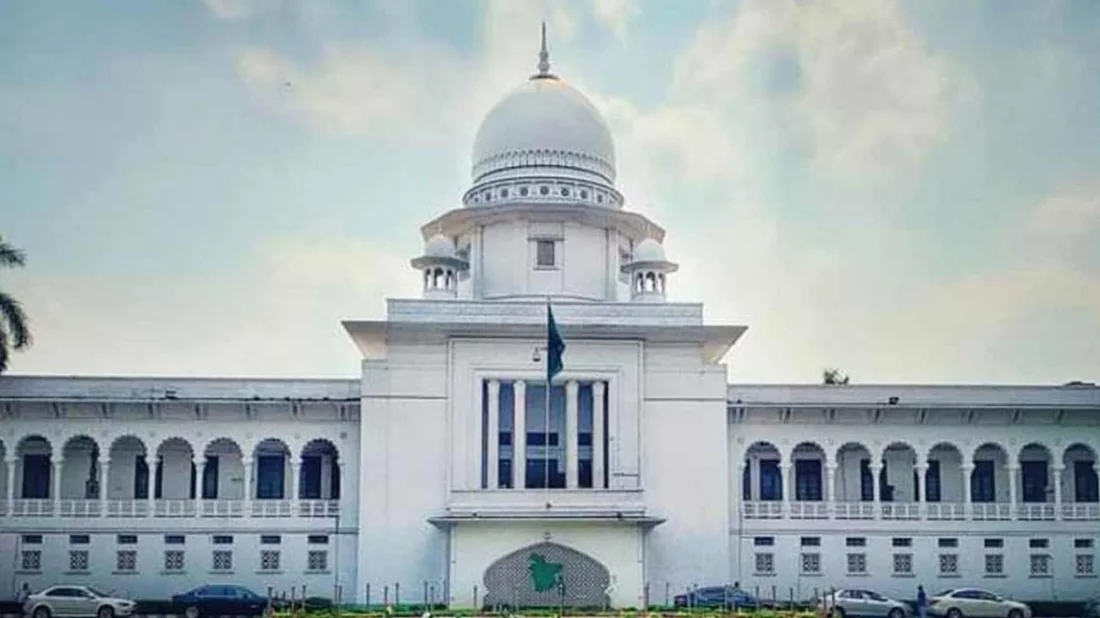

Published: 11:54 9 July 2026
The Appellate Division has upheld the High Court's verdict declaring the decision to abolish the caretaker government and referendum provisions through the 15th Amendment to the Constitution as illegal. The concerned lawyers said that the dismissal of the appeal against the High Court's decision has paved the way for the restoration of the caretaker government system and the constitutional provisions of the referendum.
A four-member appeal bench headed by the Chief Justice announced the verdict at around 9:30 am on Thursday (July 9). The country's highest court dismissed the appeal challenging the High Court's verdict regarding the 15th Amendment.
After announcing the verdict, the lawyers involved in the case referred to the decision as an important event in the country's constitutional and democratic history.
Attorney General Barrister Md. Ruhul Quddus Kajal participated in the hearing for the state in the court. Dr. Sharif Bhuiyan was on behalf of the writ petitioners. Advocate Mohammad Shishir Monir was on behalf of Jamaat-e-Islami.
Verdict after three days of hearing
The hearing of the appeal against the High Court's verdict declaring several provisions of the 15th Amendment, including the abolition of the caretaker government system, as illegal, concluded on Wednesday. After three consecutive days of hearing, the Appellate Division had set July 9 as the date for the announcement of the verdict.
Earlier, the Supreme Court had allowed the appeal against the High Court's verdict on November 13 last year. The Appellate Division headed by Chief Justice Dr. Syed Refat Ahmed gave the order.
Earlier, on November 3, a leave to appeal was filed seeking the complete repeal of the 15th Amendment. The application was filed by lawyer Dr. Sharif Bhuiyan on behalf of Dr. Badiul Alam Majumdar, editor of Sujan for Good Governance.
What the High Court verdict said
On December 17 last year, a High Court bench comprising Justice Farah Mahbub and Justice Debashish Roy Chowdhury declared some important parts of the 15th Amendment unconstitutional and illegal.
However, the court did not strike down the entire 15th Amendment. Separate decisions were given on the abolition of the caretaker government, the removal of the referendum provision, and the validity of some articles added to the constitution.
The main subject of the High Court's observation was the question of democracy and free elections. According to the court, democracy is an integral part of the basic structure of the constitution and a truly democratic system can be effective only through free, fair, impartial and influence-free elections.
The court further observed that the recent national elections held under the party government could not create the necessary confidence among the people about fair elections. This has had a profound impact on the political and social reality of the country.
Provision for abolition of caretaker government repealed
The caretaker government system was abolished through the Fifteenth Amendment. Sections 20 and 21 of the Amendment Act were related to the abolition of this system.
The High Court declared those two sections to be inconsistent with the Constitution. In the court's analysis, the caretaker government system was added to the Constitution based on the political aspirations of the people and electoral realities and at one stage it became an important part of the democratic structure.
The court felt that the process of abolishing this system had damaged the basic structure of the Constitution, especially the democratic system.
Lawyers said that the constitutional basis for the restoration of the caretaker government system has been created as the Appellate Division upheld the High Court's decision.
Referendum provision also found its way back
Another important change in the Fifteenth Amendment was the abolition of the referendum provision in amending the Constitution.
This provision of referendum was part of Article 142 of the Constitution. It was deleted through Article 47 of the Fifteenth Amendment Act.
The High Court's judgment declared that section to be inconsistent with the basic structure of the Constitution. At the same time, it was decided to reinstate the provision of referendum in the previous constitutional structure.
After the judgment of the Appellate Division, the High Court's decision has also paved the way for its effectiveness.
Decision on Articles 7A, 7B and 44(2)
The High Court also struck down Articles 7A and 7B and two clauses of Article 44, which were added to the Constitution through the Fifteenth Amendment.
Article 7A provided for considering acts such as abrogation or suspension of the Constitution as a crime. On the other hand, Article 7B determined that some basic provisions of the Constitution were not eligible for amendment.
Article 44(2) allowed Parliament to give certain powers to other courts through legislation in the implementation of fundamental rights.
The High Court ruled that these provisions were not compatible with the basic structure of the Constitution.
The entire Fifteenth Amendment was not repealed
The court's decision did not repeal all the provisions of the Fifteenth Amendment. The amendments made additions, changes and substitutions in a total of 54 cases.
The High Court's ruling said that the future National Parliament will be able to decide on the provisions that were not directly repealed by following the law and constitutional process. If necessary, there will be an opportunity to amend, modify or change based on public opinion.
These issues include the constitutional recognition of Sheikh Mujibur Rahman and the provisions related to the historic speech of March 26, along with several other issues.
How the legal battle began
On August 19 last year, the High Court issued a rule asking why the provision abolishing the caretaker government system should not be declared illegal.
The High Court bench comprising Justice Naima Haider and Justice Shashank Shekhar Sarkar gave the rule. Sujan Editor Dr. Badiul Alam Majumdar and others filed a writ petition in the preliminary hearing.
Advertisement
Most Readed - National


- We will not sit at home if shrines are destroyed: State Minister for Water Resources Farhad Hossain Azad
- Salman Shah, the evergreen hero of Bengali cinema, lost untimely
- Salman Shah murder case: Don remanded for 5 days
- Joining the Mecca Pact is Bangladesh's own matter: Jamaat Ameer
- Mbappe hat-trick sends Real Madrid thumping Sociedad
- Nepal faces another major flood threat, upstream water barrier not broken
- China to generate 42 megawatts of electricity from Aminbazar waste
- Monira Sharmin: Education, Political Career, July Uprising and Leadership of Jatiya Nari Shakti
- 15 artists including Boga Taleb to sing in memory of Razzak Dewan
- Invest Bangladesh Chairman Ashiq Chowdhury given the status of State Minister
- Romance with Shakib was comforting: Sabila Noor
- Everyone has changed their minds and is now a 'July fighter': Mirza Fakhrul
- Prime Minister Tarique Rahman to visit US for 10 days, address UN General Assembly in September
- BNP and affiliated organizations protest against AI-based propaganda of distorted image of state minister in Panchagarh
- Fans want to see me single, not with a man: Parimani
- BNP is making defeated leaders the heads of the districts: Rumin Farhana
- Aryan Khan with a mysterious young woman in London, new love rumors
- Venues for the 2027 ODI Cricket World Cup finalized, 12 stadiums in three countries to host the world stage
- The World Cup is not a product, FIFA does not have the right to sell football: UEFA
- Prime Minister assures to resolve the gas crisis in the industrial sector