'Asian Nobel' winner Runa Khan's story from struggle to world conquest

Published: 01:36 31 August 2026
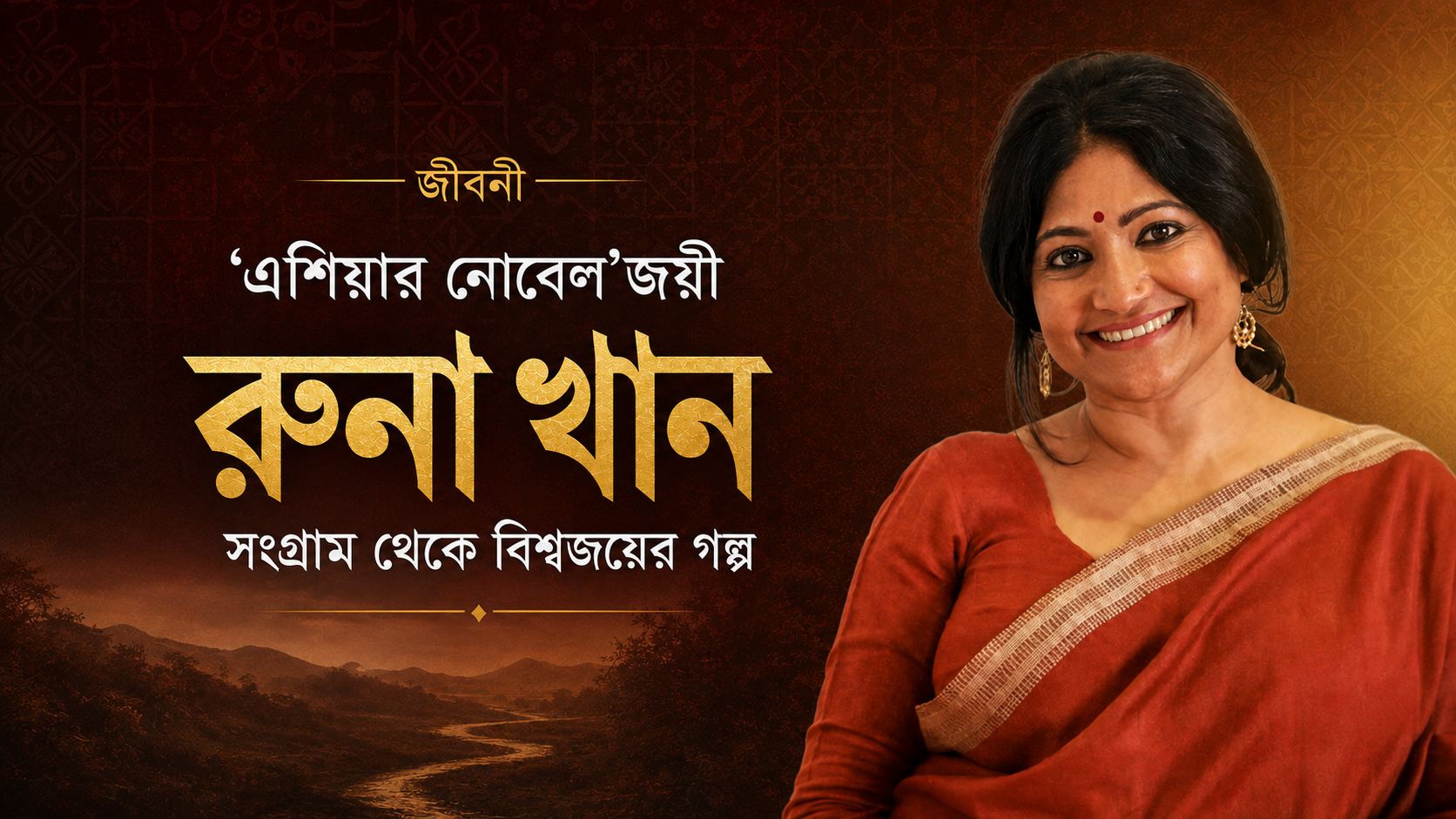
Runa Khan, one of Bangladesh’s prominent development workers and social entrepreneurs, has received the prestigious Ramon Magsaysay Award 2026 in recognition of her decades-long work for marginalized and climate-vulnerable communities.
Khan is the founder and executive director of Friendship, a Bangladesh-based development organization that works with people living in remote, riverine and climate-vulnerable areas. Through Friendship, she has developed initiatives in healthcare, education, climate adaptation, disaster management, livelihoods and social development.
Her journey from working with communities in Bangladesh’s remote chars to receiving one of Asia’s most respected awards is considered a significant achievement for Bangladesh’s development sector.
Who Is Runa Khan?
Runa Khan is a Bangladeshi social entrepreneur, development worker and humanitarian leader. She founded Friendship in 2002 with the aim of bringing essential services to people living in some of the country's most difficult-to-reach areas.
Her work has particularly focused on communities living in river islands, coastal regions and areas affected by river erosion, floods and climate change.
Khan’s approach is based on reaching people who are often excluded from conventional development systems. Instead of expecting vulnerable communities to travel long distances to access essential services, her initiatives have focused on taking those services directly to them.
Early Life and Education
Runa Khan was born on November 17, 1958. She grew up in an environment that exposed her to cultural diversity and different ideas from an early age.
According to biographical sources, she studied at Farmview International School and later attended St. Denis High School in Murree. She subsequently studied geography at Lady Brabourne College in Kolkata and completed another bachelor's degree in humanities from Eden Mohila College in Dhaka.
Her academic background and early exposure to social and cultural issues later contributed to her interest in education and community development.
Beginning of Her Social Work
Runa Khan's professional journey gradually moved toward social development and community-focused work.
She became increasingly interested in education, particularly in finding ways to provide learning opportunities to children from disadvantaged backgrounds.
Over time, her focus expanded beyond education. She began looking at the broader challenges faced by poor and marginalized communities, including healthcare, education, livelihood opportunities, poverty and environmental vulnerability.
This integrated approach eventually became a major part of the philosophy behind Friendship.
Founding Friendship in 2002
In 2002, Runa Khan founded Friendship, an organization designed to serve communities that are difficult to reach through conventional development systems.
One of Friendship's earliest and most recognizable initiatives was its floating hospital. The project was created to provide healthcare services to people living in remote char areas along Bangladesh's rivers.
For communities separated by rivers and constantly affected by erosion and changing river channels, reaching a conventional hospital can be extremely difficult.
The floating hospital model provided an innovative way to take medical services directly to these communities.
The Innovative Floating Hospital
The floating hospital became one of the most recognized examples of Runa Khan's development approach.
Instead of building a permanent hospital in locations where geography and river erosion make infrastructure difficult to maintain, Friendship used specially designed boats to provide healthcare services.
These hospitals could travel along rivers and reach communities that had limited access to healthcare.
The idea demonstrated how development programs can be adapted to local geographical realities rather than relying on a single conventional model.
Over the years, Friendship expanded its work beyond healthcare into education, climate adaptation, disaster management, livelihoods and other areas of social development.
Healthcare for Remote Communities
Healthcare remains one of the key areas of Friendship's work.
People living on river islands and in remote coastal communities often face significant challenges in accessing hospitals and qualified medical professionals.
River erosion and seasonal flooding can make transportation even more difficult.
Friendship has worked to address these challenges through floating hospitals, mobile medical services and community-based healthcare programs.
The broader philosophy behind Runa Khan's work is that development services should reach the people who face the greatest barriers to accessing them.
Runa Khan's Work in Education
Education is another major area of Friendship's activities.
Children living in riverine communities frequently face interruptions in their education because their families may be forced to relocate after river erosion or flooding.
To address this problem, Friendship has developed education initiatives designed to work within the changing realities of river communities.
Flexible and movable education facilities have helped provide learning opportunities for children whose communities are affected by environmental changes.
This approach recognizes that traditional education infrastructure may not always be suitable for communities whose physical locations can change.
Climate Change and Adaptation
Bangladesh is highly vulnerable to the effects of climate change.
Floods, cyclones, river erosion, salinity, rising sea levels and other environmental challenges affect millions of people across the country.
Runa Khan's development philosophy has increasingly connected social development with climate adaptation.
Friendship works with vulnerable communities to improve their ability to cope with environmental disasters while also supporting healthcare, education and livelihoods.
This combination of humanitarian assistance and long-term resilience-building has become an important part of the organization's work.
Disaster Management
Bangladesh regularly experiences floods, cyclones and other natural disasters.
The people living in remote coastal and riverine areas are often among those most severely affected.
Friendship has therefore worked not only on emergency response but also on disaster preparedness, rehabilitation and community resilience.
The organization's programs seek to help communities respond to disasters while developing long-term capacity to recover and adapt.
Empowering Women
Women's empowerment is also an important part of the development approach associated with Runa Khan.
Friendship's programs have supported women's participation in economic activities, skills development and livelihood opportunities.
One of the initiatives associated with Khan is Friendship Colours of the Chars, which works to connect products made by women in char communities with wider markets.
Such initiatives seek to create economic opportunities while preserving local skills and traditions.
Poverty Reduction and Livelihood Development
Runa Khan's approach to poverty reduction goes beyond providing short-term assistance.
Her development philosophy emphasizes helping people develop the skills, opportunities and resources needed to become more economically independent.
Friendship therefore works in areas such as livelihoods, economic development and skills development alongside healthcare and education.
The goal is to help marginalized communities build greater resilience and improve their ability to shape their own futures.
Expansion of Friendship's Work
Friendship began with a strong focus on healthcare but gradually developed into a broader social development organization.
Its areas of work now include healthcare, education, climate adaptation, disaster management, economic development, social inclusion, citizenship and cultural preservation.
According to Friendship, its various services reach more than 7.5 million people annually.
The organization's expansion reflects Runa Khan's belief that the problems faced by marginalized communities are interconnected and require comprehensive solutions.
International Recognition
Runa Khan's work has received recognition both in Bangladesh and internationally.
Among her notable awards are the Rolex Award for Enterprise in 2006, the Islamic Development Bank Prize for Women's Contribution to Development in 2008, and the Schwab Foundation Social Entrepreneur Award in 2012.
She also received the Green Award by Positive Planet in 2016.
These recognitions have highlighted her innovative approach to social development and her long-term commitment to marginalized communities.
What Is the Ramon Magsaysay Award?
The Ramon Magsaysay Award is one of Asia's most prestigious recognitions for individuals and organizations making significant contributions to society.
It is often described as “Asia's Nobel Prize.”
The award was established in honor of Ramon Magsaysay, the former president of the Philippines. The first Ramon Magsaysay Awards were presented in 1958.
The award recognizes individuals who demonstrate outstanding leadership, integrity and service to communities across Asia.
Why Did Runa Khan Win the Ramon Magsaysay Award?
Runa Khan received the 2026 Ramon Magsaysay Award in recognition of her decades-long commitment to marginalized, remote and climate-vulnerable communities.
Her work through Friendship has focused on creating practical solutions for people who often remain beyond the reach of traditional development systems.
The organization's floating hospitals, education initiatives, climate adaptation programs, disaster response and livelihood projects demonstrate an approach based on local needs and geographical realities.
Her leadership in building these initiatives was a major factor behind the international recognition.
The Significance of the Award for Bangladesh
Runa Khan's Ramon Magsaysay Award is significant not only for her personally but also for Bangladesh's development sector.
Her work has focused on some of the country's most vulnerable communities, particularly people living in riverine and climate-affected areas.
Bangladesh is frequently cited as one of the countries most exposed to climate-related risks. The recognition of a Bangladeshi development leader for work in climate-vulnerable communities therefore carries broader significance.
It also highlights the potential of locally developed solutions to address complex social and environmental challenges.
Runa Khan's Response to the Award
Following the announcement of the award, Runa Khan emphasized that the recognition was not simply a personal achievement.
She acknowledged the people and teams who have worked alongside her and the communities that have remained at the center of Friendship's mission.
Her response reflects a broader philosophy of collective leadership, in which development is achieved through cooperation between communities, local workers and organizations.
Other 2026 Ramon Magsaysay Award Recipients
Runa Khan was selected alongside two other distinguished individuals for the 2026 Ramon Magsaysay Award.
They are Tommy Koh, the Singaporean diplomat, lawyer and academic, and Bo Kyi, a Myanmar human rights activist.
Although their fields of work are different, all three have been recognized for their contributions to society, human rights, leadership and public service.
When Will the Award Ceremony Take Place?
The official Ramon Magsaysay Award ceremony for 2026 is scheduled to take place on November 15, 2026, at the Metropolitan Theater in Manila, Philippines.
Runa Khan and the other awardees are expected to be formally honored during the ceremony.
Runa Khan's Development Philosophy
One of the defining features of Runa Khan's work is the belief that development solutions must reflect the realities of the communities they are intended to serve.
For people living on remote river islands, a conventional hospital may not be practical. For communities frequently displaced by river erosion, a fixed school may not always be sufficient.
Friendship's programs therefore attempt to adapt development services to the geographical and environmental realities of the people they serve.
This approach has helped make Runa Khan's work distinctive in Bangladesh's development sector.
From the Charlands to the International Stage
The story of Runa Khan's career represents a journey from local community development to international recognition.
Her work began with a focus on people living in some of Bangladesh's most remote communities. Through Friendship, she helped develop innovative approaches to healthcare, education and social development.
Over time, those initiatives expanded into a wider model incorporating climate adaptation, disaster management, livelihoods and community empowerment.
The Ramon Magsaysay Award represents another major milestone in that journey.
Why Runa Khan's Work Matters
Runa Khan's work matters because it addresses a fundamental challenge in development: how to reach people who are geographically isolated and socially marginalized.
Bangladesh's riverine and coastal communities face unique challenges. Traditional development systems may struggle to serve them because of changing geography, floods, erosion and poor transportation.
By designing programs around those realities, Friendship has attempted to make essential services more accessible.
Her work also demonstrates the importance of combining immediate humanitarian support with long-term development and resilience.
Conclusion
Runa Khan's life and career represent an important chapter in Bangladesh's development story.
As the founder and executive director of Friendship, she has spent decades working with communities affected by poverty, river erosion, climate change and geographical isolation.
From floating hospitals and education programs to climate adaptation, disaster management and livelihood development, her work has sought to bring essential services directly to people who are often left beyond the reach of conventional systems.
Her international recognition has grown steadily over the years, with several major awards acknowledging her contribution to social development.
The 2026 Ramon Magsaysay Award is perhaps the most significant recognition of her career so far. The award acknowledges not only her personal leadership but also the work of the wider Friendship team and the communities at the heart of its mission.
Runa Khan's journey demonstrates how locally developed and community-focused solutions can have an international impact. Her work with Bangladesh's most vulnerable communities has helped draw global attention to the challenges faced by people living in remote and climate-vulnerable areas.
From the river islands of Bangladesh to the international stage in Manila, Runa Khan's journey stands as a notable example of social entrepreneurship, humanitarian service and development leadership.
SEO Keywords: Runa Khan, Runa Khan biography, Runa Khan Bangladesh, Runa Khan Ramon Magsaysay Award, Ramon Magsaysay Award 2026, Runa Khan Friendship, Friendship NGO Bangladesh, Runa Khan founder, Runa Khan development worker, Runa Khan social entrepreneur, Runa Khan awards, Runa Khan career, Runa Khan achievements, Ramon Magsaysay Award Bangladesh, Runa Khan latest news
Advertisement
Most Readed - Biography




- Dates Set for Appeal Hearings in 'Seven Murders', Major Sinha, and Abrar Murder Cases
- Nearly Half of Households in the Country Are in Debt; Expenses Exceed Income: BBS Survey
- Journalist Sued: Zahirul Calls for Impartial Investigation and End to Harassment
- Earning Crores from Flat Rentals: A Look at Ranbir Kapoor’s Real Estate Assets
- Opposition acting irresponsibly after securing votes with promises of 'paradise': State Minister
- 'Bringing in a foreign coach won't change everything; local coaches are also capable' – Taskin
- CJP Founder Abhijit Released; Two Other Leaders Remain in Custody
- "He is not 'Tarek Zia'; he is 'another Zia'" — Chief Whip Nurul Islam Moni
- Rumors of a Split in Sabila Nur’s Seven-Year Marriage; Allegations of a New Relationship Emerge
- A new innovation in football: ‘Electronic cards’ replace traditional yellow and red cards!
- Fuel for Rooppur Nuclear Power Plant Arriving in Bangladesh Today
- Cybercriminals Claim to Possess Data of 19 Million Pathao Users; $400,000 Ransom Demanded
- Jamuna Fertilizer Factory Shuts Down Again Just Two Days After Resuming Operations
- Ronaldo faces risk of 6-month ban for leaving national team camp
- Messi bids farewell with a goal and assists, showered with love by teammates
- Ronaldo shares emotional message upon Messi's retirement, expressing 'utmost respect'
- Hasnat Questions the Source of Salahuddin’s Wealth, Demands Transparent Accounting
- Countless Decembers will come and go, but Sheikh Hasina will not return to the country: Rashed Khan
- Three-Day Mosquito Eradication Drive Begins in Savar's Bongaon
- Hashmatullah leaves the field after injury while batting against Bangladesh