Autorickshaws banned on main roads of the capital, to operate in 8 zones on internal roads

Published: 01:27 30 August 2026
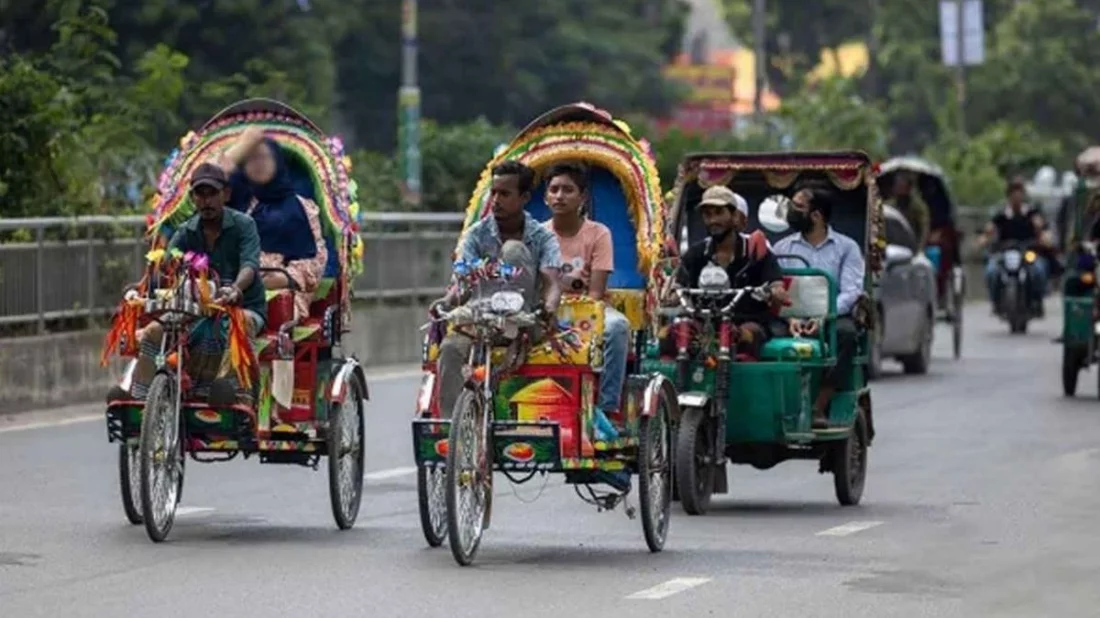
The government is planning to ban battery-operated and electric autorickshaws on the main roads of the capital. However, these autorickshaws will be allowed to operate in specific zones on internal roads of the city. This initiative is being taken with the aim of reducing traffic congestion, restoring order on the roads and making the public transport system more effective.
According to the new plan, the capital can be divided into a total of 8 zones and arrangements can be made to operate battery-operated and electric autorickshaws on internal roads. As a result, although the free movement of these vehicles on main roads is prohibited, they can be used for passenger transport within designated areas.
Why are autorickshaws being banned on main roads
The increase in the number of battery-operated autorickshaws on various main roads of the capital is causing slow and chaotic traffic. Especially on busy roads and important intersections, the movement of these vehicles often hinders the movement of other vehicles.
The main goal of the government's new plan is to maintain normal traffic flow on main roads. At the same time, arrangements should be made to limit the movement of auto-rickshaws on specific internal roads without completely stopping them.
Auto-rickshaws to operate in 8 zones
As part of the plan, it has been said that the internal roads of the capital will be divided into 8 zones. Auto-rickshaws will be able to operate within the designated zones. However, the final decision and detailed instructions on whether there will be an opportunity to use the main roads to go from one zone to another will be announced by the relevant authorities.
As a result of this arrangement, auto-rickshaws can be used for short-distance travel by local passengers. On the other hand, efforts will be made to reduce the risk of major traffic congestion on main roads.
What impact may it have on passengers
Many people rely on battery-operated and electric auto-rickshaws for short-distance travel in different areas of the capital. These vehicles play an important role, especially in reaching main roads, markets, educational institutions and other destinations from residential areas.
If auto-rickshaws are stopped on main roads, passengers may have to use alternative transport to go from one zone to another. As a result, the mode of travel of passengers may also change.
However, since there is a plan to keep auto-rickshaws operating within specific zones on internal roads, its service is unlikely to be completely stopped at the local level.
There may be new rules for drivers
The new system may set specific rules and movement limits for auto-rickshaw drivers. On which roads auto-rickshaws will operate, where they will not operate, and what action will be taken if they go outside the designated zones—these issues may be clarified in the final policy.
In addition to controlling auto-rickshaws, the issue of further streamlining the capital's transport system is also gaining importance in the plan.
Reducing traffic congestion is the main goal
Traffic congestion in the capital has been a major problem for a long time. A large number of people travel on Dhaka's roads every day for various needs. Due to the increase in the number of vehicles, limited road capacity, and various problems in traffic management, long-term traffic jams occur in different areas of the city.
Those concerned believe that if the movement of battery-operated and electric auto-rickshaws on main roads is controlled, there may be an opportunity to normalize the speed of vehicles on important roads to some extent.
Autorickshaws not completely banned
An important aspect of the new plan is that it is not being said to completely ban battery-powered and electric autorickshaws in the capital. Rather, it is being planned to move these vehicles from the main roads and arrange for movement within 8 specific zones on internal roads.
On the one hand, this will try to reduce traffic congestion and chaos on the main roads, while on the other hand, there will be an opportunity to continue using autorickshaws for short-distance passenger transport.
However, before implementing the plan, detailed decisions will be made on which roads will be considered as main roads, what will be the boundaries of the 8 zones and what kind of rules will be there for drivers.
If this change is implemented in the capital's transport system, it will have a direct impact on autorickshaw drivers, passengers and other vehicle users. Therefore, those concerned believe that it is important to take into account the advantages and disadvantages of all parties involved in implementing the new system.
Advertisement
Most Readed - National




- 500-year-old Sardar House damaged after Coke Studio shooting
- Mirza Abbas: Political Career, Ministerial Tenure, Cases, Controversies and the Rumors Surrounding the Hadi Murder
- Mirza Abbas returns home, preparing to return to Dhaka after five and a half months
- Neymar suffers from flu, Santos worries grow ahead of Corinthians derby
- ‘They will kill me’, mother and newborn die after last plea
- Autorickshaws banned on main roads of the capital, to operate in 8 zones on internal roads
- Highway blockade in Tentulia to protest sexual abuse of child, demand arrest and punishment
- Dhallywood King Shakib Khan: From Blockbuster Movies to Marriage and Controversies
- Mayoral candidate Nasim Mondal faces the public at a courtyard meeting in Sreepur
- Tokyo, not Bangkok, is becoming the new center of sex tourism
- Prime Minister Tarique Rahman to visit US for 10 days, address UN General Assembly in September
- I never thought of such a wonderful debut in Dhaka cinema: Madhumita Sarkar is excited
- Kangana Ranaut slams Naseeruddin Shah for calling him a 'fox'
- Even though I am in government, I have not forgotten the struggle on the streets and the politics of the people: Ishraq Hossain
- Who is Ruhul Kabir Rizvi? Education, political life and current responsibilities
- Chilean football league rules changed for Vojinha
- Young man leaves weapon at opponent's house, calls police, hangs himself
- If the referendum verdict is upheld, Oli Ahmed would have been the president: Jamaat
- Two helicopters collide in mid-air while fighting wildfires in Greece, 2 killed
- BPL may not happen this year: Tamim Iqbal