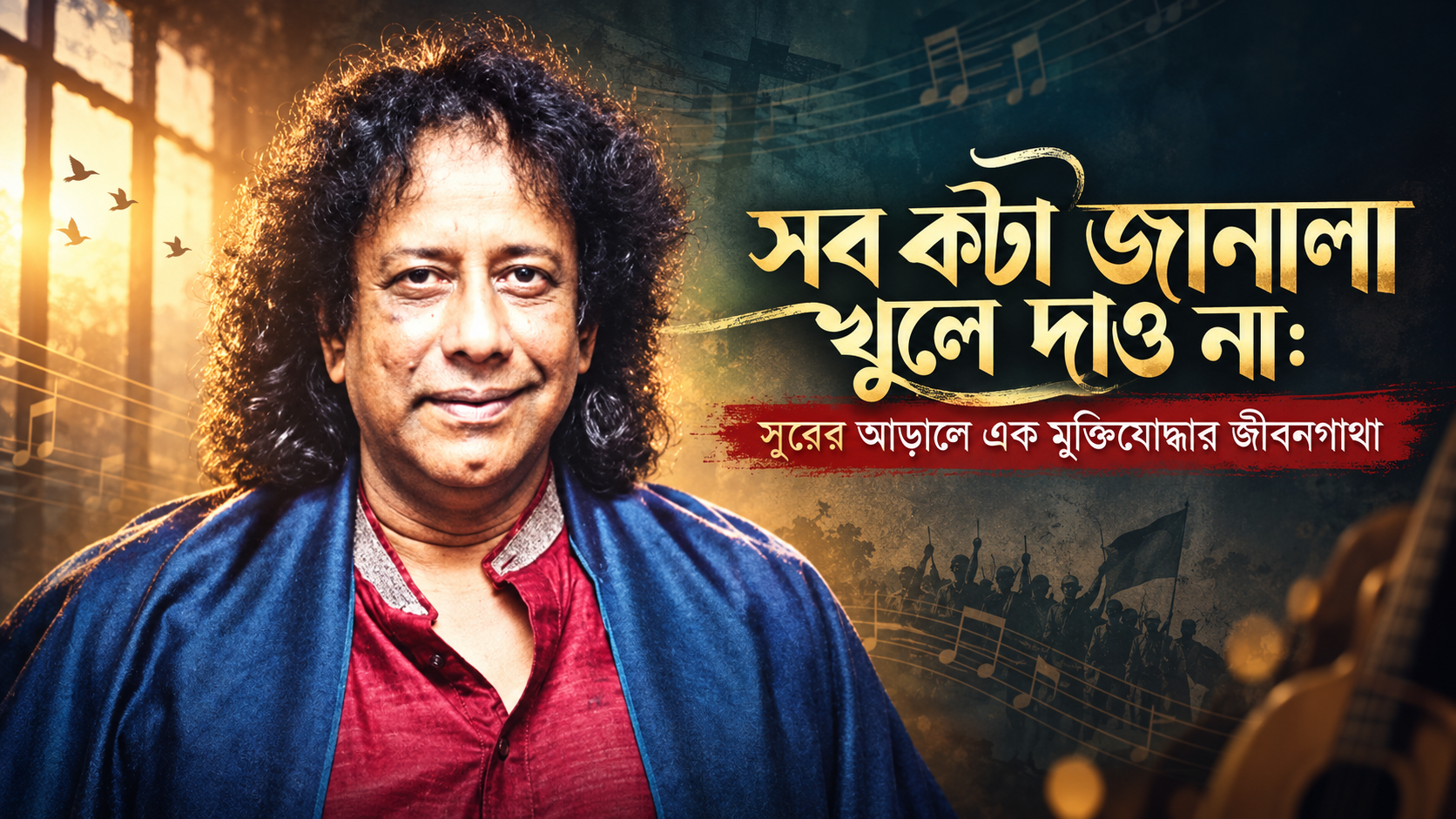
Open All the Windows: The Life Story of a Freedom Fighter, Told Through Music

Published: 12:10 22 October 2026
Ahmed Imtiaz Bulbul was one of the most distinguished figures in the musical history of Bangladesh. Through his exceptional talent, patriotism, and creativity, he established a lasting place in the country's cultural heritage. He was a freedom fighter, lyricist, composer, and music director.
His life was not merely a story of musical success; it was also a story of struggle, courage, and dedication. From participating in the Liberation War during his teenage years to making remarkable contributions to Bengali film music and modern songs, he played an important role in shaping the musical and cultural identity of Bangladesh.
1. Birth and Personal Information
Full Name: Ahmed Imtiaz Bulbul
Date of Birth: 1 January 1956
Place of Birth: Dhaka, then East Pakistan
Nationality: Bangladeshi
Professions: Lyricist, composer, and music director
Special Identity: Bir Muktijoddha (freedom fighter)
Educational Institution: West End High School, Azimpur, Dhaka
Child: One son, Samir Imtiaz
Date of Death: 22 January 2019
Age at Death: 63 years
Place of Death: Aftabnagar, Dhaka, Bangladesh
Some published reports mention 1956 and 1957 as his birth years. This biography uses 1 January 1956, a widely reported date in biographical accounts.
2. Childhood and Education (1956–1970)
Ahmed Imtiaz Bulbul was born in Dhaka and spent his childhood growing up in the city. His early years coincided with a significant period in the history of the Bengali people, when movements for linguistic, cultural, and political rights were gaining momentum in what was then East Pakistan.
He studied at West End High School in the Azimpur area of Dhaka. His teenage years coincided with a period of major political and social transformation in the region.
During the late 1960s, the Bengali people's struggle for autonomy and growing political unrest influenced many young people of his generation. Bulbul grew up amid this historical atmosphere, which formed an important backdrop to his early life.
Detailed and reliably documented information about his childhood music education and family life remains limited. However, his participation in the Liberation War in 1971 demonstrated his involvement in the defining historical struggle of his generation.
3. Participation in the Liberation War (1971)
When the Bangladesh Liberation War began in 1971, Ahmed Imtiaz Bulbul was only 15 years old. While still a school student, he joined the struggle for the independence of Bangladesh.
He became involved with the freedom fighters and participated in activities associated with the war. His role in the struggle later established his identity not only as a prominent musical figure but also as a freedom fighter.
According to various biographical accounts, he was captured and tortured by Pakistani forces and their collaborators during the war. These painful experiences became an important part of his life story.
After independence, patriotism, the spirit of freedom, memories of the Liberation War, and respect for the martyrs became important themes in his musical work.
In later years, he also testified before the International Crimes Tribunal during the proceedings concerning crimes against humanity committed during the 1971 Liberation War.
4. Beginning of His Musical Career (1970s)
After independence, Ahmed Imtiaz Bulbul gradually established himself in the professional music industry.
His career as a film music director began in 1978 with the film Megh Bijli Badal.
One of the distinctive features of his compositions was their memorable melodies, emotionally expressive arrangements, and close connection between lyrics and music.
Alongside film music, he worked on modern Bengali songs and patriotic music. Over the following decades, many popular singers performed songs composed or arranged under his musical direction.
His compositions explored a wide range of human emotions, including love, separation, sorrow, patriotism, and affection for the motherland.
Through his creative work, he helped make Bengali music more emotionally expressive and accessible to a broad audience.
5. The Golden Period of His Musical Career (1980s–2000s)
From the 1980s onward, Ahmed Imtiaz Bulbul became one of the most recognized composers in Bangladeshi film music and modern Bengali songs.
His compositions expressed love, heartbreak, human emotions, patriotism, and social consciousness. He played a particularly important role in enhancing the emotional impact of films through carefully crafted songs and musical arrangements.
Among the well-known singers who worked with him were Sabina Yasmin, Andrew Kishore, Kanak Chapa, Samina Chowdhury, and Khalid Hasan Milu, among others.
His Notable Songs
The following songs are associated with his contributions as a lyricist, composer, or music director. He did not necessarily write the lyrics and compose the music for every song listed below.
1. Shob K'ta Janala Khule Dao Na: One of Bangladesh's best-known patriotic songs. The lyrics were written by Nazrul Islam Babu, and the music was composed by Ahmed Imtiaz Bulbul. The song is closely associated with memories of the Liberation War and the spirit of independence.
2. O Majhi Nao Chhaira De: A well-known song associated with patriotic sentiment and love for the homeland.
3. Shei Rail Line-er Dhare: An emotionally expressive song remembered for its portrayal of human feelings, memories, and sorrow.
4. Shundor Shuborno Tarunno Labonno: A recognizable patriotic song associated with the tradition of Bengali music celebrating the country.
5. Amar Shara Deho Kheyo Go Mati: A popular film song known for its emotional depth.
6. Amar Babar Mukhe Prothom Jedin: An emotionally expressive song associated with Bengali film music.
7. Amar Buker Moddhikhane: A popular song associated with modern Bengali and film music.
8. Tumi Mor Jiboner Bhabona: A well-known romantic film song.
9. Pore Na Chokher Polok: A recognizable Bengali love song.
10. Ekattorer Ma Jononi: A song associated with the Liberation War, motherhood, sacrifice, and patriotism.
These songs have remained familiar to generations of Bengali music lovers. Bulbul's emotional melodies and distinctive musical arrangements contributed significantly to the popularity of Bengali songs.
6. Contributions to Cinema and National Recognition
Throughout his long career, Ahmed Imtiaz Bulbul worked on songs and background music for numerous films. His contribution to the development and popularity of Bangladeshi film music was significant.
Two particularly notable achievements in his career were:
- 2001: He received the National Film Award for Best Music Director for the film Premer Taj Mahal.
- 2005: He received the National Film Award for Best Music Director for the film Hajar Bachhor Dhore.
In addition to his work in cinema, he served as a judge on the musical talent competition Closeup One: Tomakei Khujchhe Bangladesh.
Through this role, he helped evaluate emerging musical talents and shared his experience with a new generation of aspiring singers.
His work in film music and talent development strengthened his reputation as an influential figure in the Bangladeshi music industry.
7. Awards and Honours
Ahmed Imtiaz Bulbul received several awards and honours in recognition of his contributions to music and cinema in Bangladesh.
National Film Award, 2001: He received the award for Best Music Director for his work on Premer Taj Mahal.
National Film Award, 2005: He received the award for Best Music Director for his work on Hajar Bachhor Dhore.
Ekushey Padak, 2010: He was honoured with the Ekushey Padak for his contribution to Bangladeshi music.
Shikha Anirban Medal: This honour is also mentioned among the distinctions associated with his career in various biographical accounts.
In addition, he received recognition from the Bangladesh Film Journalists Association (BAKSAS) and other organizations associated with the music and film industries.
These honours reflect the significance of his long career and his contribution to the cultural heritage of Bangladesh.
8. Personal and Family Life
Ahmed Imtiaz Bulbul's personal life included several changes and challenges.
He was married to Suborna Imtiaz, and the couple later divorced. They had one son, Samir Imtiaz.
Alongside his demanding musical career, he experienced changes in his family life. However, detailed and reliably documented information about many aspects of his private family relationships remains limited.
Some events during the later years of his life were reported to have caused him considerable emotional distress.
Despite these personal challenges, he continued to be remembered for his musical achievements and his identity as a freedom fighter.
9. The War Crimes Trial and the Death of His Brother (2012–2013)
One of the most painful chapters in Ahmed Imtiaz Bulbul's life was the death of his younger brother, Ahmed Miraj.
On 5 October 2012, Bulbul testified for the prosecution against Ghulam Azam before the International Crimes Tribunal in Bangladesh.
In March 2013, the body of his younger brother, Ahmed Miraj, was recovered near the Kuril Flyover in Dhaka. According to reports about the post-mortem examination, the death was treated as a homicide.
Following this incident, Bulbul appealed to the government for protection for himself and his family. He also spoke about receiving threats to his life.
However, the available reports do not establish that a direct causal connection between his testimony and his brother's killing was proven in court.
The incident remains one of the most tragic episodes associated with his personal life.
10. Later Life and Health Problems (2018–2019)
During the final years of his life, Ahmed Imtiaz Bulbul suffered from heart-related complications.
In 2018, his heart condition became serious, and he required medical treatment.
Despite his health problems and personal difficulties, he continued to be respected by the people of Bangladesh as a talented composer and a dedicated freedom fighter.
His extensive experience in music, patriotic spirit, and commitment to Bengali musical traditions made him one of the memorable figures in the country's cultural history.
11. Death: 22 January 2019
22 January 2019 was a day of mourning for the Bangladeshi music industry.
Early that morning, Ahmed Imtiaz Bulbul suffered a heart attack at his residence in Aftabnagar, Dhaka. He was taken to a hospital, where doctors declared him dead.
He was 63 years old at the time of his death.
News of his passing caused deep sorrow throughout the music and film industries of Bangladesh. Singers, colleagues, cultural personalities, and members of the public paid tribute to his contributions.
His death marked the loss of an experienced composer, music director, and patriotic artist whose work had touched the lives of countless listeners.
Final Tributes and Burial
On 23 January 2019, his body was taken to the Central Shaheed Minar in Dhaka, where people from different walks of life gathered to pay their final respects.
As a freedom fighter, he was also accorded state honours.
After funeral prayers at Dhaka University Central Mosque and the Bangladesh Film Development Corporation (BFDC) premises, he was buried at the Martyred Intellectuals Graveyard in Mirpur, Dhaka.
His passing marked the departure of a person who had made a lasting contribution to both the struggle for independence and the cultural life of Bangladesh.
12. Chronology of His Life
1956: Born in Dhaka.
1960s: Attended school in the Azimpur area of Dhaka.
1971: Participated in the Bangladesh Liberation War at the age of 15.
1978: Began his career in film music direction with Megh Bijli Badal.
1980s–1990s: Gained widespread recognition for film music, modern Bengali songs, and patriotic music.
2001: Received the National Film Award for his work on Premer Taj Mahal.
2005: Received the National Film Award for his work on Hajar Bachhor Dhore.
2010: Received the Ekushey Padak for his contribution to music.
2012: Testified before the International Crimes Tribunal.
2013: His younger brother, Ahmed Miraj, was killed.
2018: Received treatment for heart-related complications.
2019: Died on 22 January and was buried on 23 January.
13. His Legacy in the History of Bangladeshi Music
Ahmed Imtiaz Bulbul's life and work can be understood through three important aspects.
Patriotism and the Liberation War: His direct participation in the struggle for independence and his later contribution to patriotic music helped preserve the memories and spirit of the Liberation War for future generations.
Development of Bengali Music: His work in film music, modern songs, and patriotic compositions enriched the musical heritage of Bangladesh. His melodies, arrangements, and creative approach helped establish a distinctive place for him in the country's music industry.
Inspiration for the Next Generation: His career remains an important example of creativity, perseverance, and commitment to national culture for aspiring musicians and music lovers.
His songs expressed personal emotions, love, separation, patriotism, and memories of the Liberation War. This is one reason his work continues to hold significance beyond the period in which it was created.
Through his compositions and musical direction, he helped connect generations of listeners with the emotional and cultural experiences of the Bengali people.
Conclusion
Ahmed Imtiaz Bulbul's life represented an extraordinary combination of the struggle for independence and dedication to music. At only 15 years of age, he took part in the fight for his country's freedom. In the years that followed, he used music to communicate patriotism, love, happiness, and sorrow to millions of people.
Through his creative work, he enriched the emotional, historical, and cultural dimensions of Bangladeshi music. Despite facing personal hardships, he established a lasting place in the country's musical history through his artistic contributions.
Although he passed away on 22 January 2019, his music remains an important part of Bangladesh's cultural heritage.
Ahmed Imtiaz Bulbul will be remembered both as a brave freedom fighter and as an exceptional musical creator whose contributions continue to resonate with generations of Bengali music lovers.
Advertisement
Most Readed - Biography




- Scaloni to Remain at the Helm for Argentina; Contract Extended Through 2030 World Cup
- A Novel Form of Robbery: Young Man Forced to Take Out an Instant Loan via App
- Open All the Windows: The Life Story of a Freedom Fighter, Told Through Music
- Bangladeshis Forced into War in Russia Under Pretext of Employment
- Excessive Drinking After Separation: Yuzvendra Chahal Spent 26 Days in Rehab
- Severe Fuel Crisis in Yemen: 1.6 Million Children in Taiz Face Risk to Drinking Water Supply
- Today is Bijoya Dashami; the Sharadiya Durgotsav concludes with the immersion of the idols.
- Who Can Get a Free Verified Badge on Facebook? Eligibility and Conditions
- From Shah Rukh to Salman: The Security Categories Assigned to Top Bollywood Stars
- Ishraq Hossain Outraged by Nahid’s Remarks; Declares NCP’s Future ‘Zero’
- Fuel for Rooppur Nuclear Power Plant Arriving in Bangladesh Today
- Cybercriminals Claim to Possess Data of 19 Million Pathao Users; $400,000 Ransom Demanded
- Jamuna Fertilizer Factory Shuts Down Again Just Two Days After Resuming Operations
- Ronaldo faces risk of 6-month ban for leaving national team camp
- Messi bids farewell with a goal and assists, showered with love by teammates
- Hasnat Questions the Source of Salahuddin’s Wealth, Demands Transparent Accounting
- Ronaldo shares emotional message upon Messi's retirement, expressing 'utmost respect'
- Countless Decembers will come and go, but Sheikh Hasina will not return to the country: Rashed Khan
- Three-Day Mosquito Eradication Drive Begins in Savar's Bongaon
- Hashmatullah leaves the field after injury while batting against Bangladesh