Hundreds of earthquakes detected in Antarctica, new concerns among scientists over 'Doomsday Glacier'

Published: 05:13 6 January 2026
Although Antarctica, the fifth largest continent in the world, is unsuitable for human habitation due to adverse weather conditions, it is very important for the global climate and biosphere. About 70 percent of the world's freshwater reserves are stored frozen here. However, this huge ice reserve is now under serious threat due to the effects of climate change, especially the glaciers in Antarctica are becoming rapidly unstable.
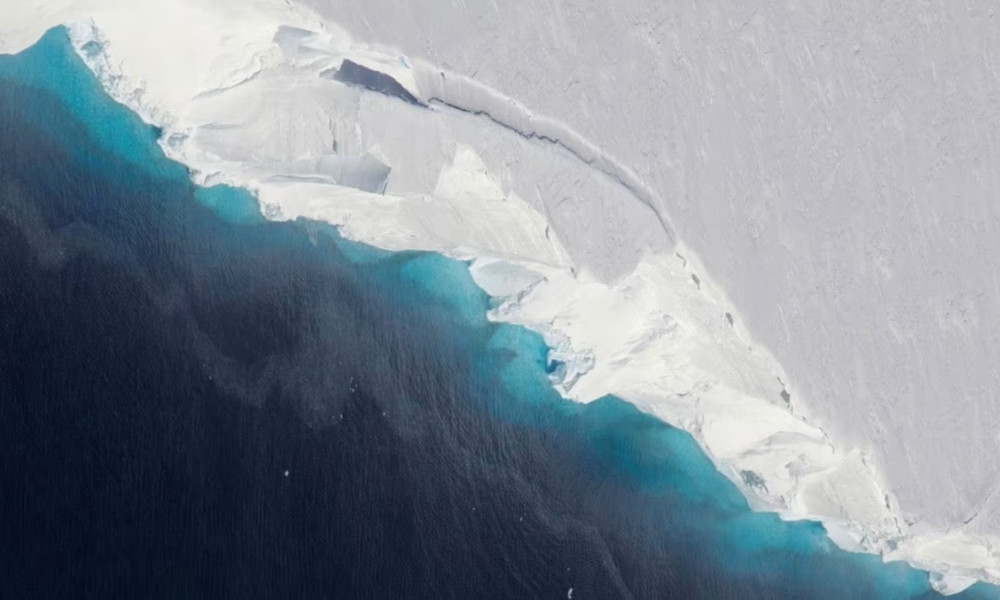
The most talked about among these glaciers is the Thwaites Glacier, also known as the 'Doomsday Glacier'. A recent study has revealed that hundreds of glacial earthquakes occurred in this glacier area between 2010 and 2023. The matter has caused deep concern among scientists, because these earthquakes indicate rapid glacier erosion and rising sea levels.
Glacial earthquakes are not like ordinary earthquakes. When a large block of ice breaks off from a glacier and falls into the sea, it creates low-frequency seismic waves. These types of earthquakes are called glacial earthquakes. They are relatively difficult to detect because they do not produce high-frequency waves.
A new study published in the journal Geographical Research Letters provides detailed information about these glacial earthquakes. The study says that these earthquakes could accelerate the erosion of glaciers in the future, which could lead to dangerously high global sea levels.
In a report published in The Conversation, Thanh-Son Pham, an ARC DECRA Fellow in the Department of Geophysics at the Australian National University, said that using seismic stations installed in Antarctica, he detected more than 360 glacial earthquakes around Thwaites and Pine Island Glaciers between 2010 and 2023.
He added that about 245 of these earthquakes are believed to have been caused by icebergs breaking off from the seaward edge of the Thwaites Glacier and falling into the sea. These earthquakes are directly related to the rapid migration and instability of the glacier.
Scientists fear that if the Thwaites Glacier completely collapses, global sea levels could rise by about three meters. This would severely damage coastal areas and threaten the lives and livelihoods of billions of people.
Researchers believe that if more in-depth and detailed information about glacial earthquakes can be collected, it will be possible to make more accurate predictions about the risk of glacier collapse and sea level rise in the future. This silent signal of climate change is therefore becoming a major warning to the world.
Advertisement
Most Readed - Weather

- We will not sit at home if shrines are destroyed: State Minister for Water Resources Farhad Hossain Azad
- Salman Shah, the evergreen hero of Bengali cinema, lost untimely
- Salman Shah murder case: Don remanded for 5 days
- Joining the Mecca Pact is Bangladesh's own matter: Jamaat Ameer
- Mbappe hat-trick sends Real Madrid thumping Sociedad
- Nepal faces another major flood threat, upstream water barrier not broken
- China to generate 42 megawatts of electricity from Aminbazar waste
- Monira Sharmin: Education, Political Career, July Uprising and Leadership of Jatiya Nari Shakti
- 15 artists including Boga Taleb to sing in memory of Razzak Dewan
- Invest Bangladesh Chairman Ashiq Chowdhury given the status of State Minister
- Romance with Shakib was comforting: Sabila Noor
- Everyone has changed their minds and is now a 'July fighter': Mirza Fakhrul
- BNP and affiliated organizations protest against AI-based propaganda of distorted image of state minister in Panchagarh
- Prime Minister Tarique Rahman to visit US for 10 days, address UN General Assembly in September
- Fans want to see me single, not with a man: Parimani
- BNP is making defeated leaders the heads of the districts: Rumin Farhana
- Aryan Khan with a mysterious young woman in London, new love rumors
- Venues for the 2027 ODI Cricket World Cup finalized, 12 stadiums in three countries to host the world stage
- The World Cup is not a product, FIFA does not have the right to sell football: UEFA
- Prime Minister assures to resolve the gas crisis in the industrial sector